On July 14, New Brunswick’s Department of Environment and Local Government issued an air quality warning as wildfire smoke drifted in from Quebec. That province has already burned through more than 530,000 hectares this season, up from just 9,300 hectares at the end of June. If your sky looked hazy or your throat felt scratchy last week, that’s why. Unfortunately, there are large fires in Ontario right now as well, so we are likely to have a few more advisories issued this summer.
Close your windows and doors, run your HVAC fan on “on” instead of “auto” (or a portable air purifier) with the fresh-air intake shut, and hold off on frying, candles, or the wood stove until the smoke clears. The rest of this covers the how and the why, plus what to do once the air outside finally clears up.
What’s floating around in wildfire smoke?
The part that matters most indoors is fine particulate matter, known as PM2.5. It’s small enough to slip past your body’s natural filters and settle deep in your lungs, and it’s small enough to slip into your home through the same gaps that let in a draft in January: door frames, window seals, exhaust fans, even electrical outlets on an exterior wall. A house that feels sealed up tight during a smoke event usually isn’t, not fully. That’s the whole reason indoor air needs its own plan separate from just staying inside.
How does New Brunswick track how bad it is?
Environment Canada uses the Air Quality Health Index, or AQHI, a scale from 1 to 10-plus. Low numbers mean low risk, high numbers mean the smoke is thick enough to affect your health even indoors. New Brunswick’s AQHI page for Moncton updates through the day, and it’s worth a bookmark for the rest of this wildfire season, since forecasters are calling for above-average fire activity out west as summer goes on.
Seal the gaps before you worry about filtering
Filtering smoky air matters less if fresh smoke keeps finding its way back in. Keep windows and doors shut for the length of the warning. If you can feel a draft around a door frame or window, that’s a spot smoke is getting in too. Weather stripping, a door sweep, or even a rolled towel at the base of a door goes a long way for the length of a bad smoke day.
What to do with your HVAC
If you have central air or forced-air heat, set the fan to “on” rather than “auto” so it’s filtering air continuously instead of only when the temperature calls for it. If your system pulls in fresh air from outside, switch it to recirculate so it isn’t pulling smoke in with it. A MERV 13 filter catches more of the fine particulate that matters here, though it’s worth a quick check with your HVAC technician first, since not every older system is built to handle the extra resistance.
Do you need a portable air purifier?
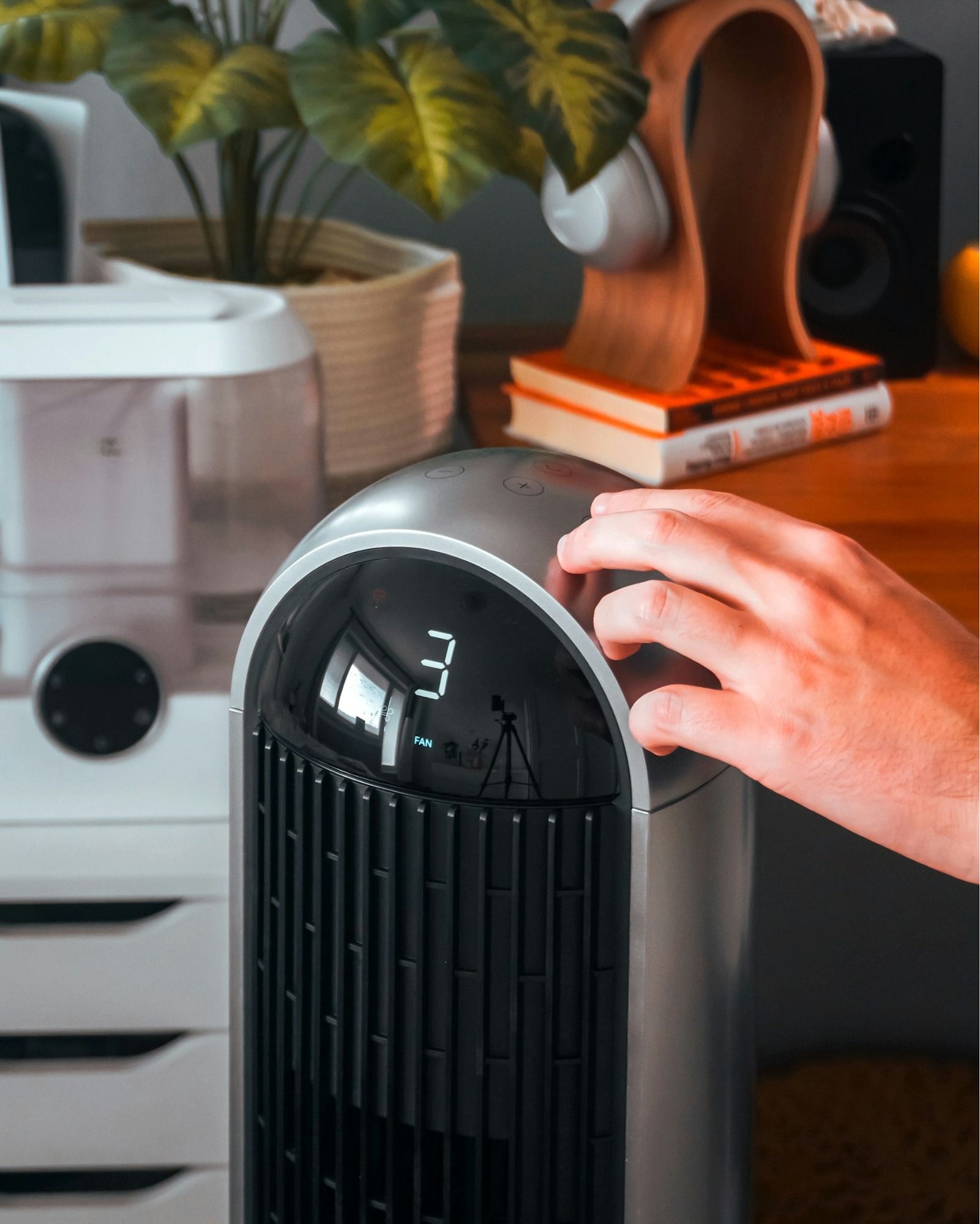
Not strictly, but it helps, especially in a house without central air. Look for one with a true HEPA filter and no ozone output, sized for the room you’re using it in, and let it run continuously with the door and windows shut. EPA testing found commercial portable air cleaners can cut indoor smoke particle levels by close to 45% when run this way. If buying one isn’t in the cards right now, a box fan with a MERV 13 filter taped to the intake side does a real job too. It’s been tested and it works, it’s just louder and less pretty.
Set up one clean room
Pick a room, a bedroom with its own bathroom is ideal, and treat it as the room where the air stays cleanest. No cooking, no candles, no vacuuming in there. Keep the door shut, run your purifier or a MERV 13-filtered fan in it, and use it as the room you and anyone more sensitive to smoke (kids, older family members, anyone with asthma) spend the most time in when the AQHI number climbs.
Skip these indoors while the warning’s up
A handful of everyday habits work against everything above: burning candles or incense, frying or broiling food, running a wood stove or fireplace, spraying aerosols, and vacuuming with anything other than a HEPA-filtered vacuum. A regular vacuum without a HEPA filter kicks fine dust and particles right back into the air instead of trapping them, which undoes a lot of the sealing and filtering work.
The part most people skip once the smoke clears
Even in a well-sealed house, some of that fine particulate settles on surfaces before it gets filtered out. Once the warning lifts, a damp cloth does more good than a dry duster, since dry dusting just stirs particles back into the air instead of removing them. Wipe down window sills, counters, and shelves, especially anywhere near a window or door that stayed open before the warning went up. Bedding, curtains, and anything fabric near a window are worth a wash too, since smoke smell tends to hang onto soft surfaces longer than hard ones. And if your HVAC or purifier filter has been running hard for a few days straight, that’s a good moment to check whether it needs swapping. A clogged filter stops filtering.
What to do, by situation
| Situation | What’s going on | What to do |
|---|---|---|
| AQHI is high and you’re home for the day | Outdoor particulate is elevated enough to matter indoors too | Seal windows and doors, HVAC fan on “on” and recirculating, spend more time in your clean room |
| No central air or purifier on hand | Filtering options feel limited | A box fan with a MERV 13 filter taped to the intake side, tested and proven effective by EPA researchers |
| Smoke smell lingers after the warning lifts | Particles settled on surfaces and fabric while the air was smoky | Damp-wipe hard surfaces, wash bedding and curtains near windows, hold off opening everything up until the AQHI reading drops |
| Someone in the house has asthma, is pregnant, elderly, or young | More sensitive to fine particulate than most | Extra time in the clean room, and more caution outdoors even at moderate AQHI levels |
FAQ
Do closed windows keep smoke out completely?
No, they cut down on it a lot but gaps around frames and doors still let some in. Weather stripping and a door sweep close that gap further.
Do I need to buy an air purifier?
Not necessarily. A box fan with a MERV 13 filter taped over the intake side has been tested by EPA researchers and works well. A HEPA purifier is nice to have, not required.
Can I run my HVAC fan constantly for a few days?
Most systems handle it fine for the length of a warning. If you’re not sure, a quick call to your HVAC tech will settle it, along with whether your system can take a MERV 13 filter.
How do I know when it’s safe to open the windows again?
Check the AQHI reading for Moncton rather than going by smell or how the sky looks. Smoke can thin out visually well before the particulate count drops.
Do pets need the same precautions?
Yes. Keep them inside during high AQHI stretches, especially any pet with existing breathing issues.
Does cleaning the house help with wildfire dust?
It helps with what’s already settled on surfaces, damp wiping rather than dry dusting matters here. But the bigger win during an active warning is limiting what gets in in the first place.
New Brunswick’s had a few stretches like this already this summer, and with fire activity out west expected to pick up before fall, there’s a decent chance of more smoke drifting our way before the season’s done. Close the gaps, run the filter, and give the clean room a try next time the warning goes up.
Moncton Cleaning Co. serves Moncton, Riverview, and surrounding neighborhoods.


- Cleaning Tips / FAQ
- Commercial/STR
- Uncategorized
Categories
Stay Updated
We will send you info about our business